
Hello! Have you ever wondered what really lies behind the resounding victories or unexpected defeats of your favorite basketball team? Do you feel uncertain when placing bets, wondering if your team is at its peak performance? You’re not alone.
In the dramatic world of basketball, understanding a team’s current form – or the current performance of a team – is key. It not only helps you gain a deeper understanding of the game’s dynamics, but it’s also crucial for making informed decisions, especially when it comes to betting.
Betting Online Now will be your guide, helping you uncover the secrets behind statistics and the factors influencing performance. Let’s decipher the ‘art’ of reading team form, giving you more confidence in all your predictions!
Understanding Basketball Team Form
Are you a basketball fan, or simply want to make more accurate predictions about game results? You’ve probably heard of “form”—a seemingly simple factor, yet one that holds a wealth of information. Understanding a basketball team’s form not only helps you gain a deeper understanding of the game, but it’s also the golden key to making smart decisions, especially in the field of betting.
Many people only look at win/loss results, but that’s just the tip of the iceberg. How can you truly “read” the hidden strengths or signs of decline of a team? This article will be your guide to deciphering the mysteries behind the “playing style” of any team, transforming you from an ordinary viewer into a true expert analyst.
Essential Elements for Effectively Reading a Basketball Team’s Form
To truly “read” a basketball team’s performance effectively, we need more than just looking at the scoreboard. It’s an art of analysis requiring subtlety and a multi-faceted perspective.
Don’t worry, the core elements below will guide you to see through the true strength, momentum, or decline of any team. From recent game results and personnel situation to advanced statistics, each piece tells a unique story, revealing its potential for victory. Let’s explore these secrets!
Basketball Team Form: Recent Game Results
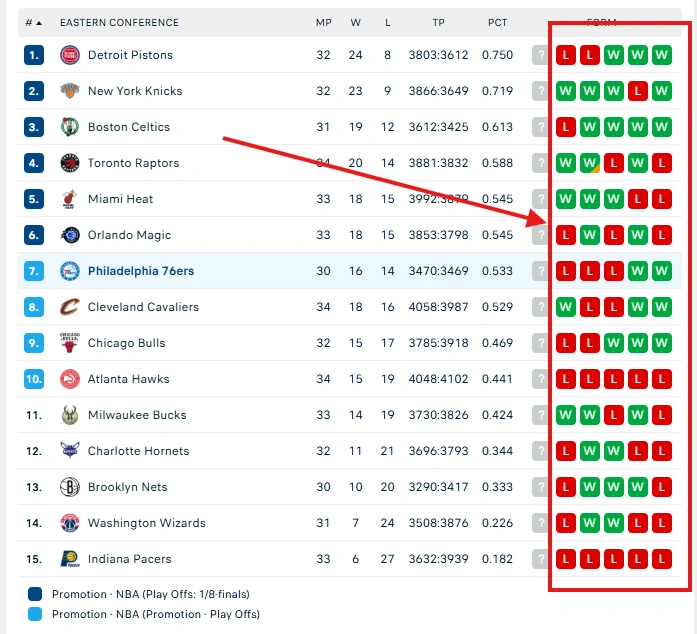
When you want to understand a basketball team’s performance, the first and most intuitive thing to do is to carefully examine their recent game results. This isn’t simply about seeing whether the team wins or loses, but a deep analysis to understand the overall picture of their current performance.
Look at the win/loss ratio over the last 5-10 games. A team on a winning streak is clearly on a roll, with high confidence and team spirit. Conversely, a long losing streak can signal a decline in fitness, tactics, or even internal conflict. This is a basic but extremely important indicator.
However, don’t stop there! You need to delve deeper into the points scored and conceded. A team that scores many points and concedes few goals shows balanced offensive and defensive strength. But put these numbers into context: who were their opponents? Winning against a weak team by a narrow margin isn’t as impressive as beating a championship contender by a large margin. The quality of the opponent is a key factor in assessing the true value of a win or loss.
Finally, don’t overlook the home and away advantage. Many basketball teams perform exceptionally well when playing at home with the support of their fans, but struggle when playing away. A thorough analysis of these details will give you a more comprehensive understanding of a team’s performance.
Win/Loss: Win Rate in Recent Games
When trying to assess a basketball team’s performance, the first and most obvious indicator is its win/loss ratio in recent games. This is the most visual indicator, clearly reflecting the current form of a basketball team, showing whether they are at their peak or going through a difficult period.
A winning streak isn’t just about the numbers; it’s also a sign of confidence, teamwork, and high team spirit. Conversely, a series of losses can signal psychological, tactical, or physical problems for key players. Look at the last 5 to 10 games to get the most comprehensive overview of the team’s winning streak or decline.
Don’t just look at the numbers; put yourself in the shoes of a fan to feel the team’s “pulse” through each result. A team that has won 8 out of their last 10 games is clearly performing very well, often making them a strong contender for betting odds. However, this can also lead to them being overvalued in the market, creating opportunities for the opposite outcome if you are astute enough.
Points scored and conceded: Offensive and defensive trends
Don’t just look at the win-loss results! To truly understand a basketball team’s performance, you need to delve into the telling numbers: points scored and points conceded. This is the clearest reflection of a team’s offensive and defensive trends.
A team might win consecutively, but if they consistently score many points while also conceding a lot, it’s a sign of a weak defense. Conversely, a team that has lost a few games but consistently concedes a low number of points shows that its defense remains formidable.
Pay attention to the average scoring trend and the number of points conceded in the last 5-10 games. Is the team explosive offensively or struggling on the ball? Is their defense becoming more solid or constantly being breached by opponents?
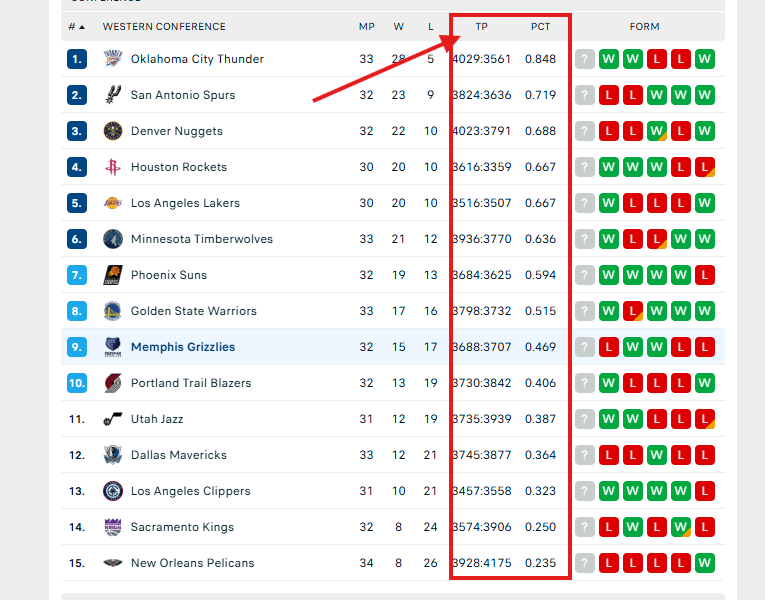
A deeper analysis will show that a team with a high scoring efficiency is usually very confident offensively, willing to play fast, and take risks. Meanwhile, a team with a good defensive record usually focuses on discipline, aggressive pressing, and minimizing opportunities for opponents. Understanding these trends is key to making more accurate assessments of each team’s true strength.
Opponent quality: Were the opponents strong or weak?
Have you ever heard the saying, “Judge a person by their friends”? In basketball, we need to assess a team by the quality of the opponents it has faced. A long winning streak can be impressive, but is it a sign of a truly top-tier basketball team, or simply the result of an easy schedule?
Imagine: a team has just won 5 games in a row. Sounds great, right? But if 4 of those were against bottom-ranked teams and one against an opponent struggling with injuries, is that momentum still reliable? This is where you need to look deeper, beyond just the win/loss numbers.
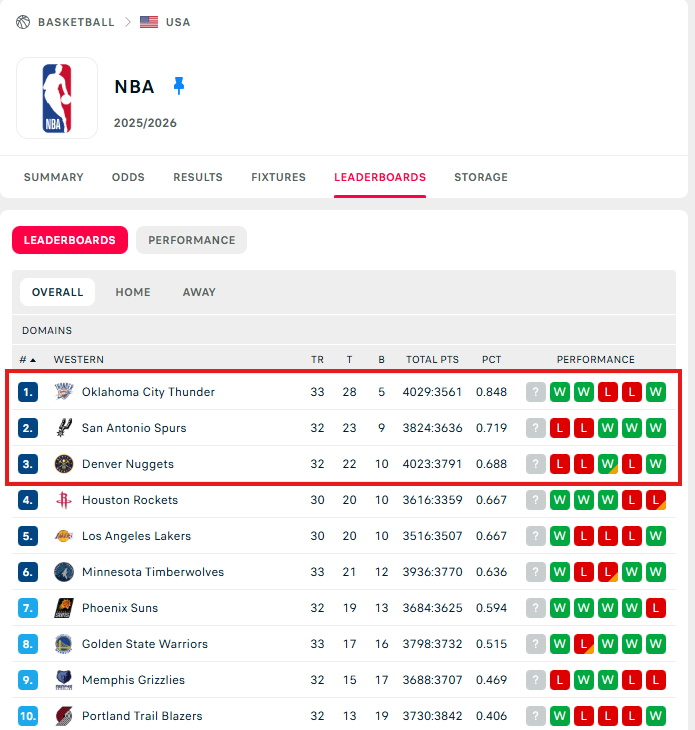
Conversely, a team has just suffered three consecutive losses. Sounds worrying? But if all three losses were against championship contenders or top-ranked teams, in close matches, it’s not necessarily a sign of decline. Sometimes, losses against strong opponents are valuable lessons, helping the team train and prepare better for the next challenge.
Analyzing the opponent’s level helps us gain a more objective view of a team’s true performance. It allows you to accurately determine whether a winning streak is genuinely impressive or merely a temporary illusion, thereby enabling you to make more informed decisions when assessing the overall strength and capabilities of the team.
Home and Away Performance
Have you ever wondered why a strong team often “falls short” when playing away from home, or conversely, why an average team suddenly explodes in front of its home crowd? This is where we need to delve into home and away performance – a key factor in accurately assessing the performance of any basketball team.
Home games offer a huge psychological advantage. The passionate support from the fans, familiarity with the playing environment, and the absence of fatigue from long journeys all contribute to creating a solid “fortress.” Many teams are almost invincible at home, where they play with the highest confidence and performance.
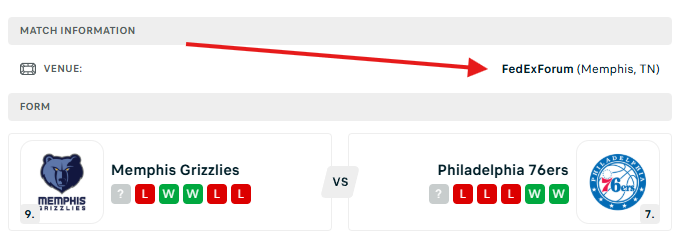
Conversely, away games often come with pressure, fatigue, and sometimes a hostile atmosphere, making it difficult even for big stars to maintain peak performance. This analysis not only helps you better understand the true strength of the team but also serves as a crucial guide for making informed betting decisions, especially when there is a significant difference in the location of the game.
Personnel and Injuries
When you want to understand a basketball team’s performance, never overlook the human element. Personnel situation and injury fluctuations are among the strongest indicators, capable of changing the course of any game, even an entire season.
Imagine a key star player absent due to injury or suspension. This absence is not simply the loss of a good player, but also disrupts the tactical structure, significantly reducing scoring ability, defense, and team morale. The team may have to completely change its playing style, or inexperienced reserve players may have to shoulder a heavy responsibility, directly impacting overall performance.
Conversely, the return of a key player after injury can bring a refreshing and exciting new energy. While it may take time to regain their rhythm, their presence alone is enough to boost morale, increase squad depth, and provide more diverse offensive and defensive options. This is a potential “lifesaver,” helping the team regain its former strength.
Therefore, before each game, constantly updating information on injuries, availability, or even the health status of star players is essential. It gives you a more realistic and in-depth understanding of the team’s true capabilities, allowing you to make more accurate and confident predictions about the game’s outcome.
The Absence of Key Players
When analyzing a basketball team’s performance, a crucial factor you cannot ignore is the team’s personnel situation. In particular, the absence of key players can completely change the course of a game and the performance of a basketball team. The absence of a major star doesn’t just mean a loss of points or defensive ability; it profoundly affects the entire offensive and defensive structure of the team.
Imagine a team losing its main scorer. Their offense will struggle to create opportunities, forcing other players to shoulder greater responsibility, sometimes in positions outside their natural strengths. This reduces overall efficiency, making the game more unstable and unpredictable.
Similarly, when a key defensive player is unavailable, the team’s ability to protect the basket or guard opponents will significantly decrease. Opponents will find it easier to penetrate the defense, leading to easy scoring and a loss of team confidence. At this point, you need to carefully reassess the team’s current performance.
Furthermore, the absence of a key player has a significant impact on the team’s morale. The lack of a leader or motivator can diminish fighting spirit, directly affecting concentration and determination in every play. This is a crucial factor in accurately assessing the team’s current state.

The Return of a Player After Injury
When a key player returns to the court after an injury, it’s always news that fans and bettors alike pay special attention to. Their presence can completely change the game, bringing a fresh impetus to the basketball team’s performance.
However, don’t jump to conclusions that everything will be immediately good. It’s crucial to conduct a thorough analysis: how long has this star player been absent? What is the extent of the injury? And does the player need time to regain their fitness and best form?
Often, coaches will have strategies for reintegrating players. They may be limited in playing time or only appear at certain times. This means their impact on the team’s overall performance may not be immediately maximized, creating unpredictable fluctuations.
From an analytical perspective, consider whether the betting market is overreacting to this information. A player’s return is certainly a huge morale boost, but tactically and physically, it sometimes takes a few games for the team to truly regain its synergy. This is the time to show your acumen, assessing whether this addition will truly “elevate” the team immediately or is just a gradual recovery, opening up potentially lucrative betting opportunities.
Advanced Statistics for Assessing Basketball Team Form
- To truly understand a basketball team’s performance, you need to go beyond the basic numbers. Advanced statistics are key to dissecting a team’s performance, revealing what’s happening beneath the surface, and thus gaining a better understanding of their current state.
Offensive Rating: This metric measures the number of points a team scores per 100 possessions. It’s more important than total points scored because it eliminates the speed of the game. A high Offensive Rating indicates effective offensive performance, regardless of the Pace of the game. - Defensive Rating: Conversely, this metric shows the number of points a team concedes per 100 possessions. A low Defensive Rating is a sign of a solid defense, capable of effectively stopping opponents, which is the foundation for any victory.
- Pace: This metric represents the average number of possessions a team has in a game. A team with a high Pace prefers fast-paced, continuous ball control, while a team with a low Pace prefers a more controlled, slower style of play. Understanding Pace helps you accurately assess their scoring and offensive/defensive performance.
- Three-point shooting percentage, free throw percentage, rebound percentage: Don’t overlook these percentages. A high three-point shooting percentage shows the ability to make impactful plays from a distance. A good free-throw percentage demonstrates composure and individual skill
The rebound percentage reflects the ability to contest possession and control the game under the basket. These are important statistics, revealing consistency and effectiveness in each play, giving you a comprehensive view of the team’s competitive ability.
Basketball Team Form: Offensive Rating
Have you ever wondered how to assess how effective a basketball team is offensively, ignoring the speed of the game? The answer lies in the Offensive Rating – a “magical” number that every professional analyst trusts. This is a measure of how many points a team scores per 100 possessions.
Unlike simply looking at total points scored, Offensive Rating provides deeper insight into a team’s true offensive capabilities. It eliminates the game speed factor, allowing for a fair comparison of scoring efficiency between teams with fast or slow playing styles. A team with consistently high ORtg demonstrates stable and reliable offensive performance.
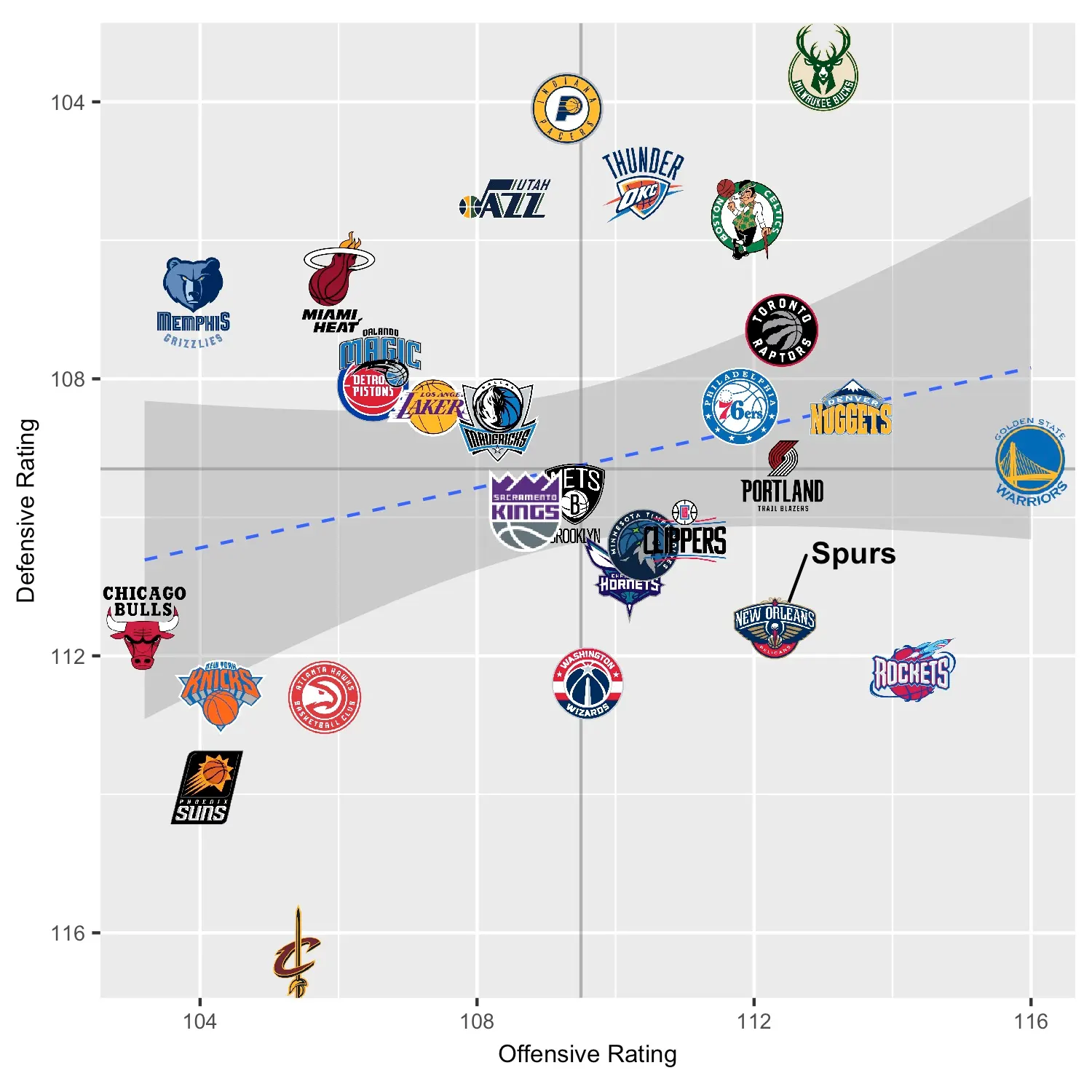
When analyzing this metric, pay attention to trends. A team with a steadily increasing ORtg suggests they are finding their offensive rhythm, improving teamwork, or that key players are peaking. Conversely, a decline in ORtg could be a sign of countered offensive strategies, decreased shooting efficiency, or problems with ball circulation.
Mastering this metric allows you to objectively assess the firepower of a team. It’s not just dry statistics; it’s the golden key to understanding a team’s current attacking state, leading to more accurate predictions about match outcomes, especially in over/under betting.
Basketball Team Form: Defensive Rating
To truly understand a basketball team’s performance, you need to look beyond mere point numbers. Focus on Defensive Rating – a metric that measures the number of points a team concedes per 100 possessions. This is a superior metric because it eliminates the speed of the game, allowing us to assess true defensive ability without being distracted by the Pace of play.
A low Defensive Rating is a clear sign of a solid, disciplined defense that consistently troubles opponents. This is key to stability and a core element in maintaining high performance. Always compare this metric to the league average and especially to direct competitors to get a comprehensive view of their defensive strength.
Mastering this metric will enhance your “reading” skills, especially when applying it to betting decisions. A team with top-notch defense, even if its offense isn’t particularly explosive, can still be a reliable underdog or an ideal choice for low total points bets. It helps you identify teams that can effectively shut down their opponents, creating dramatic and unpredictable games.
How to read Offensive/ Defensive rating in Basketball?
What the Chart Shows
- The x-axis represents Offensive Rating (how efficient a team is at scoring).
- The y-axis represents Defensive Rating (how efficient a team is at preventing opponents from scoring).
- Each NBA team logo is plotted according to its offensive and defensive performance.
- The trend line shows the general relationship between offense and defense across all teams.
- The Spurs are highlighted with an arrow, meaning the chart wants to draw attention to their specific performance compared to the league average.
How to Interpret
- Teams far to the right → stronger offense.
- Teams higher up → stronger defense.
- Teams close to the trend line → balanced performance.
- Teams far away from the line → unusual profile (e.g., very strong offense but weak defense, or vice versa).
Example
Imagine:
- Houseton Rockets appear far to the right but lower on the chart → they score a lot but allow many points (great offense, weaker defense).
- Milwaukee Bucks appear higher up and slightly right → they combine strong defense with solid offense.
- Chicago Bulls → their position shows whether they are above or below average in both ratings. If they are below the line, it means their defense isn’t keeping up with their offense compared to other teams.
Basketball Team Form: Game Pace
Did you know that in basketball, not only the final result but also the rhythm of the game is an extremely important indicator of performance? That’s “Game Pace.” This metric measures the average number of offensive opportunities a team creates in 48 minutes of play. Understanding each team’s Pace will open up valuable insights into their playing style and potential.
A team with a high Pace usually prefers a fast-paced style of play, constantly switching offenses, and is willing to take many shots. Conversely, teams with low Pace will focus more on ball control, meticulously orchestrating offense, and prioritizing high-quality shots. This directly impacts the overall score and is a key factor when comprehensively analyzing a basketball team’s performance.
When two teams with different paces face off, the team that dictates its own tempo usually has the advantage. For example, if a high-pace team plays a low-pace team, and the game is fast-paced, the high-pace team will have more scoring opportunities, and vice versa. This not only affects the final score but also provides a solid basis for predicting Over/Under bets.
Never ignore the Pace metric when analyzing! It helps you visualize the coach’s tactics, the players’ fitness levels, and how a team operates in different situations. Understanding Pace is like grasping a part of the soul of the game, helping you make smarter decisions when watching or betting.
Three-point Shooting Percentage
Did you know that seemingly small numbers like three-point shooting percentage, free throw percentage, and rebound percentage can paint a clear picture of a basketball team’s performance?
Let’s delve deeper. Three-point shooting Percentage is an extremely important indicator in modern basketball. A team that maintains high efficiency from the three-point line not only scores more points but also expands its offensive space, creating more opportunities. Conversely, a team that constantly shoots poorly will face significant difficulties, easily be outmaneuvered by opponents, and lose confidence.
Equally important is the free-throw percentage. These are “free” points that a team cannot afford to miss. Especially in tense, dramatic games, each successful free throw can be a key factor in determining victory or defeat. A team with a high free-throw percentage often demonstrates focus and composure under pressure.
And don’t forget rebounds – the art of regaining possession. Good rebounding ability, both offensively and defensively, gives the team a second scoring opportunity or prevents the opponent from making another offensive play. A team strong in rebounds usually controls the Pace of the game and displays superior physical strength. A thorough analysis of these metrics will give you a more comprehensive view of a team’s performance.
Mastering the Art of Reading Basketball Team Form Performance
So, you’ve now explored and mastered the art of reading basketball team performance. From simple results and personnel situations to advanced statistical indicators, you now have a powerful tool at your disposal to comprehensively evaluate a team.
Understanding how a team is performing not only helps you enjoy the game more deeply but is also key to making insightful judgments. Especially if you’re interested in betting, this is a competitive advantage that enhances your predictive abilities and smart decision-making.
Confidently apply this knowledge in practice. With each game and each analysis, you will gradually transform reading team performance into your “sixth sense.” We wish you accurate insights and great success!