
Overview of Offside Fouls in Modern Football

The offside Fouls rule exists to maintain a balance between attack and defense. Without this rule, forwards could “lurk” in front of the opponent’s goal, disrupting the tactical structure of football.
Definition of Offside Fouls According to International Football Rules
A player is considered offside when simultaneously satisfying the following elements:
- Standing closer to the opponent’s goal than both the ball and the second-to-last defender at the time the ball is passed.
- Involved directly or indirectly in the ball situation (challenging, impacting an opponent, or receiving the ball from a teammate).
If the player is only behind the defensive line but not involved in the situation, they will not be penalized.
Purpose of the offside Fouls rule
To prevent diving and diving in front of the goal.
To maintain tactical organization and reasonable distances between lines.
To encourage creative attacking instead of simply exploiting weaknesses.
The History of the Offside Fouls
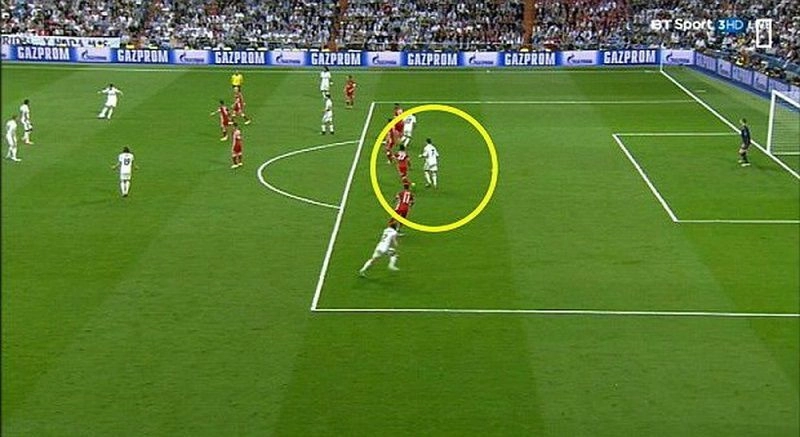
Initially, the offside Fouls rule was strictly enforced (a player needed at least three defenders in front of them to be offside). After several revisions, FIFA and IFAB loosened it to better suit high-speed football. The introduction of VAR and SAOT in recent years marks a new step forward in minimizing errors.
Common Situations Leading to Offside Fouls
Offside fouls are not only related to position but also depend on intent and impact on the game.
Players are directly involved in the challenge.
If a forward receives the ball in an offside position and participates in the play (touching, shielding, obstructing), he will be penalized. This is the most obvious type of foul.
Players interfering with an opponent’s vision or behavior
Even without touching the ball, an offside player is still penalized if they stand in the goalkeeper’s line of sight or obstruct a defender. This is a subtle situation, heavily dependent on the referee’s subjective judgment.
Players receiving the ball from an unintentional clearance
If the ball bounces off a defender randomly, the offside player receiving the ball is still penalized.
If a defender intentionally passes the ball back, the opposing player, even if standing behind, is not considered offside.
Common Mistakes Made by Players and Teams
Lack of Coordination in Attacking Situations
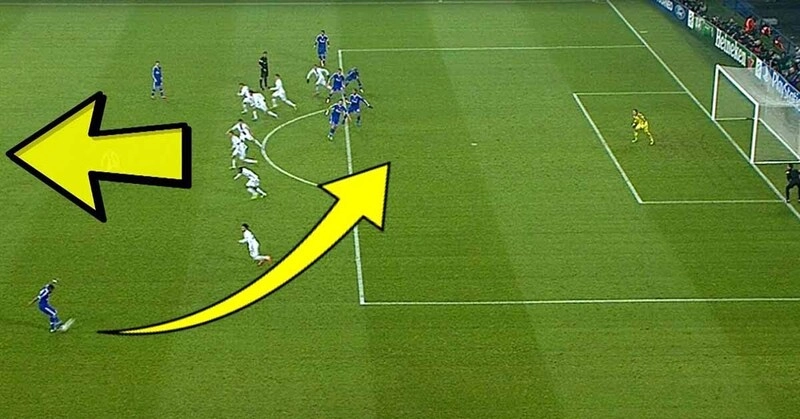
Mistimed passes, or forwards moving too early before the pass, easily lead to offside Fouls.
Misjudging Defender Positions
Not Understanding the Rules in Near-Boundary Situations
How Referees Determine Offside Fouls on the Field
The Role of the Linesman
- Always stands level with the last defender to observe.
- Raises the flag when a player is found to be offside.
Coordination Procedure
- The linesman gives the signal.
- The main referee makes the final decision. If in doubt, VAR will be consulted to determine the exact outcome.
Modern Technology in Determining Offside Fouls
VAR (Video Assistant Referee)
Using multi-angle cameras, VAR reconstructs the situation and determines whether a player is offside. However, VAR sometimes takes a long time, disrupting the match.
SAOT (Semi-Automated Offside Technology)
This semi-automated technology uses sensors embedded in the ball and a 12-14 angle camera system. The software tracks player movement in real time and sends alerts to VAR.
Let’s dive into the fascinating world of SAOT and explore how it truly works!
3D Skeletal Modeling System
This technology creates a 3D skeletal model of a player, accurately identifying the parts of the body that could score, such as the head, shoulders, and legs. As a result, the error rate is almost zero.
Transparency and Speed
The time to determine offside errors is shortened from minutes to seconds, making the match more seamless.
Controversy and Limitations in Determining Offside
- Determining Body Parts Offside Fouls: Many goals have been disallowed simply because a toe or shoulder went past the last defender. This has raised debate about whether the rule is too strict and discourages attacking play.
- Subjectivity in Judging Behavior: Despite technological assistance, referees still have to assess whether a player is “involved in the play.” This is a difficult and controversial factor.
- Player Psychology: Being repeatedly called offside can cause strikers to lose confidence, limiting their creativity and attacking movement.
Read more:Prediction and betting tips for MU vs Newcastle, 3:00 AM on December 27th – Premier League